
2026-05-20
Dragon Game and 7U Brasil: Exploring Online Casino Adventures
Discover the world of the Dragon game and the enticing online casino opportunities with 7U Brasil's signup bonuses.

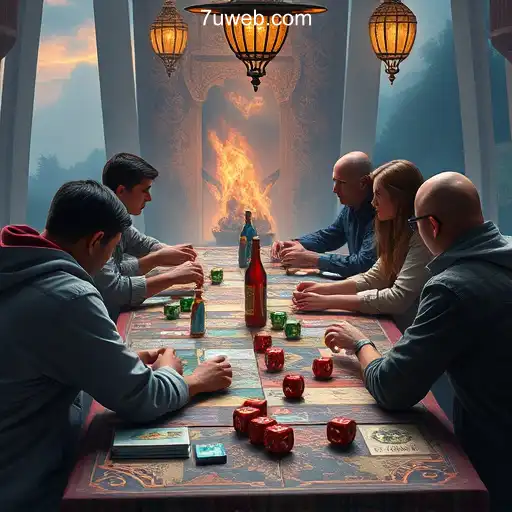
The allure of tabletop games has seen a renaissance in recent years. Passionate players gather around tables, rolling dice, dealing cards, and immersing themselves in intricate game mechanics that challenge both strategy and social skills. While electronic games reign supreme in today’s digital age, the tactile, face-to-face interaction offered by tabletop games remains unmatched.
The history of tabletop games stretches back thousands of years, with archaeological findings suggesting that ancient civilizations such as the Egyptians and Romans engaged in board and dice games. As societies evolved, so did the complexity and variety of these games. By the 20th century, classics like chess and checkers were joined by new innovations such as Monopoly and Scrabble, progressively leading to more intricate games like Settlers of Catan and Carcassonne.
Tabletop games are more than just recreational activities; they are cultural phenomena that mirror the motivations and desires of the societies that create them. Unlike their digital counterparts, they require no screens or programming but rely solely on imagination, intellect, and interaction.
The heart of modern tabletop gaming lies in its diversity. Strategy games like "Risk" and "Catan" challenge players to outthink opponents, while cooperative games like "Pandemic" require them to work together to achieve a common goal. The realm of tabletop gaming even overlaps with immersive role-playing games (RPGs) such as "Dungeons & Dragons," where narrative and character development create enthralling adventures.
What sets tabletop games apart is their depth and replayability. For instance, titles like "Gloomhaven" offer intricate narratives combined with strategic depth, providing countless hours of entertainment. Meanwhile, games such as "Azul" focus on abstract strategies, requiring players to optimize their moves for maximum points. The spectrum is vast, catering to broad interests and skill levels.
One of the primary attractions of tabletop games is the face-to-face interaction they promote. In a world increasingly dominated by digital communication, these games offer a refreshing alternative, encouraging personal interaction and communication in a shared physical space.
Tabletop games serve as a medium for social bonding, whether it's among family members or friends. They provide an opportunity to disconnect from screens and engage in meaningful interactions, requiring cooperation, negotiation, and sometimes, deception. Such dynamics foster a sense of community and can even develop valuable life skills such as critical thinking and empathy.
The surge in popularity of tabletop games has spurred the growth of vibrant communities worldwide. Conventions like Essen Spiel in Germany and Gen Con in the United States attract tens of thousands of enthusiasts every year, eager to explore new games and meet like-minded individuals.
Local game nights and meetup groups have become common, creating spaces where enthusiasts can gather, share strategies, and organize sessions. Whether in a local cafe or a dedicated game store, these communities foster friendships and rivalries, each game playing a part in weaving the social fabric.
Despite their analog nature, tabletop games have not been immune to the influences of our digital world. Digital platforms like "BoardGameArena" and "Tabletop Simulator" have emerged, offering digital versions of popular games. These platforms have expanded the reach of tabletop games, allowing players across the globe to connect and compete in real-time.
Moreover, crowdfunding platforms like Kickstarter have significantly impacted the tabletop game industry, enabling independent creators to fund their projects and bring unique game ideas to fruition. This democratization has led to an influx of innovative and diverse gaming experiences for enthusiasts to explore.
Beyond entertainment, tabletop games have found applications in educational and therapeutic settings. Educational institutions utilize games to teach complex subjects in an engaging manner, while therapists employ them to help individuals develop social skills and coping mechanisms.
In businesses, tabletop games are used as team-building exercises, promoting collaboration, strategic thinking, and leadership skills among employees. The benefits are manifold, cementing their place as a versatile medium that goes beyond mere amusement.
Interestingly, as digital platforms broaden the horizons of tabletop games, a unique intersection with online casinos has emerged. Platforms like 7U Brasil: cassino online com bônus de cadastro offer players attractive bonuses, integrating elements of chance games with strategic play typically found in tabletop experiences.
The hybridization of these two gaming worlds allows players to experience elements of traditional tabletop games within the digital textile of online casinos. From card games to more elaborate role-playing setups, these platforms have created opportunities for new interactive experiences that blend luck and skill.
This intersection underscores the dynamic nature of the gaming landscape, where traditional and digital realms coexist, sometimes blending to offer unique and captivating experiences.
Discover the world of the Dragon game and the enticing online casino opportunities with 7U Brasil's signup bonuses.

Explore the game RushFeverSodaPop, its thrilling features, and how it becomes a sensation in the context of online gaming trends and bonuses like those offered by 7U Brasil.

Explore the captivating world of PuppyLove, a delightful online game that combines adorable puppies with exciting gameplay. Learn about its features, rules, and the buzz it is creating amidst the current gaming landscape.